In celebration of more than a century of plant pathology publishing, Phytopathology has released a new virtual collection highlighting foundational research that has shaped the field of plant pathology since the journal’s inception in 1911. The virtual issue offers a compelling look at the research—both widely cited and quietly influential—that laid the groundwork for scientific breakthroughs across generations.
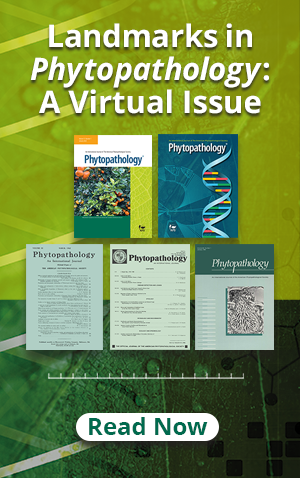
“Phytopathology has remained a cornerstone of the plant science community for 114 years because of its strong core values, respected editorial leadership, and commitment to adapting with the times,” said Leonardo De La Fuente, Editor-in-Chief of the journal. “This collection honors that legacy while highlighting its continued relevance to today’s researchers."
Rather than focus exclusively on citation metrics, the team of senior editorial board members chose papers that continue to influence the field in meaningful ways even decades after publication. Spanning more than 70 years, the issue includes seminal works such as Harold H. Flor’s 1942 paper “Inheritance of Pathogenicity in Melampsora lini” and a 2016 study by Immediate Past-APS President Karen Garrett introducing a framework for interpreting microbiome networks. Many of the manuscripts included in this collection are being made available online for the first time.
Juan José López-Moya, a senior editor, reflected on the project: “Working on this virtual issue was both fun and stimulating. Nowadays, research papers are often massive, brute-force efforts by large teams, complex in conception and execution. Yet it is striking how comparatively simple, focused studies have contributed so much more to the discipline."
In addition to the scientific articles, the virtual issue features personal reflections from many of the original authors. These narratives provide behind-the-scenes glimpses into the origins of key ideas, collaborations, and challenges—underscoring the human side of scientific discovery.
Senior editors also contributed short commentaries on their favorite papers, offering insights into how these works shaped their own careers and the broader field. As the editors note, “A great manuscript, like a great piece of art, is not just a technical achievement; it carries the mark of human insight and experience."
Though not exhaustive, this collection stands as a meaningful tribute to the journal’s history and continued influence.
Explore the virtual issue here: https://apsjournals.apsnet.org/landmarksphyto