Rescheduled Broadcast Date: January 29, 2025 | 11:00 a.m. Central
This is the rescheduled date due to an IT outage.
Price: FREE for members, $49 for nonmembers
Register Now!
Thanks to the generosity of our sponsors, designated funds will also award a one year, complimentary APS membership for a limited number of registrants from a country with a developing economy. Please review the list of
Developing Economy eligible countries to determine if you are eligible. Registrants must attend the webinar to earn their complimentary membership. Please note that this will be awarded on a first come, first served basis and will be removed from the registration process when funds are exhausted.
Thank You to our Series Sponsors:
- Bayer
- The APHIS Widely Prevalent Bacteria Committee
Webinar Summary
Members of the
Ralstoniasolanacearum species complex (RSSC) cause bacterial wilt, a globally destructive disease of market and subsistence crops. Like other plant-associated microbes, bacteria in the RSSC must integrate a complex array of biotic and abiotic signals to successfully infect plant hosts. This talk will ask, what mechanisms enable
Ralstonia to transition from soil to its pathogenic niche in host plant xylem tissue? We noticed RSSC genomes all encode an unusual protein, termed RprR, that contains multiple sensing and signaling domains, including two putative modulators of the secondary messenger c-di-GMP. Deleting RprR in
R. pseudosolanacearum had a strictly plant-dependent effect on many traits, including production of the key virulence factors biofilm and exopolysaccharide, as well as levels of c-di-GMP. While c-di-GMP has been investigated in other plant pathogenic bacteria, this is the first report of its role in the RSSC. Most importantly,
rprR was required for
Ralstonia to effectively colonize plants and cause wilt disease. I will share experimental data showing that RprR is a plant-responsive sensor-regulator controlling both pathogen adaptation to the host environment and specific virulence traits.
About the Presenter
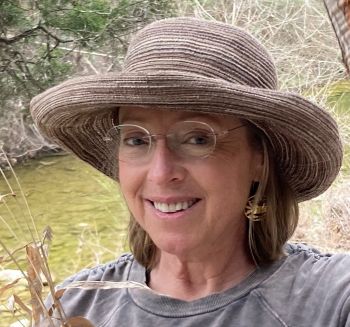
Caitilyn Allen
University of Wisconsin - Madison
Caitilyn Allen was born in Germany and grew up in the American Midwest. She attended Swarthmore College and worked on an unprofitable organic vegetable farm before earning her Ph.D. in Plant Pathology from Virginia Tech University. Her doctoral research launched her long love affair with bacteria. She did postdoctoral research in Lyon, France studying how plant pathogenic enterobacteria digest their plant hosts from the inside out. During her second postdoc at University of Wisconsin-Madison, Allen began working with bacterial wilt, a serious disease of many tropical crops that has commanded her interest and respect ever since. In 1992 she joined the UW-Madison faculty, where she is currently Ethel and O.N. Allen Emeritus Professor of Phytobacteriology. Her research, which includes both fundamental and translational topics, has been disseminated in over 125 papers and several books. Allen has mentored more than 50 graduate students and postdocs in her lab. Her service includes the APS Bacteriology, Regulatory Plant Pathology, and APS Press committees, editorial work for
Phytopathology and
MPMI, diverse program and departmental reviews, and Chair of the Department of Plant Pathology. Allen, who has taught courses in Plant Pathology, Microbiology, and Gender and Women’s Studies, has received multiple awards for her teaching. She is a Fellow of the American Phytopathological Society and of the American Association for the Advancement of Science.
About the Advances in Phytobacteriology Series
The Bacteriology Committee's educational webinar series aims to promote interdisciplinary and cross-institutional collaboration by disseminating groundbreaking research findings in Phytobacteriology. The goal of the series is to engage the scientific community, the series features insights from leading experts in the field. It also strengthens professional networks to facilitate collaboration and knowledge exchange.
After participating in the Bacteriology Committee's educational webinar series, which focuses on groundbreaking research, collaboration, and knowledge sharing, attendees will gain awareness of the latest advancements and technological innovations in bacteriology, while also grasping emerging trends and novel methodologies that are shaping the future of the field. Participants will learn about current collaborative projects and initiatives within the bacteriological community and related disciplines, understanding the impact of recent research findings on shaping the future needs of research in phytobacteriology.