C.R. Curtis
Department of Plant Pathology
The Ohio State University, Columbus
Curtis.6@osu.edu
Curtis, C.R. 2002. Is Asynchronous Teaching And Learning Worth It For You? Top Ten Take-Home Lessons On Starting An Online Course. The Plant Health Instructor. DOI:10.1094/PHI-T-2002-0820-01. Archived 2012.
"The trouble with our times is that the future is not what it used to be." - Paul Valéry (1871-1945)
The Internet is a remarkable tool that creates unprecedented opportunities for changes in the way we teach. Through the Internet, instructors can offer courses and, in some cases, a complete education to anyone with Internet access - "anywhere, anytime" instruction, as it is often termed. Some major benefits of asynchronous distance learning by "anywhere, anytime" instruction include extreme flexibility in scheduling, an increased capacity for self-management, and the students' freedom to choose whether they want to enroll on- or off-campus. However, the process of creating and fine-honing an online course is a daunting prospect. This paper will attempt to demystify the process of setting up an online course.
The focus here is not necessarily for the seasoned-veteran web teacher. This discussion may be best utilized by the computer-novice professor who wants to learn something new or is just interested in the process. Perhaps you were invited by the department to "do something on the web," or perhaps you were only curious about starting an online classroom. What's involved? More importantly, how does one fit existing class material into an engaging new curricular design for online interactions and instruction? And furthermore, how does this fit into an effective pedagogy?
These questions have been addressed by many researchers. Volumes of articles exist providing excellent advice on how to design a distance-learning course. I felt that work of this nature should not be attempted without wide and proper counsel. I studied many articles, consulted our campus experts, attended distance-learning workshops on and off campus, wrote a teaching grant, and advised the administration before beginning the work on an online course. With this background, I began preparing a 2-credit Plant Pathology 201 course, "Social Impact of Plant Diseases in Human Affairs," for a completely online presentation. A summary of this effort was first reported in the International Society of Plant Protection (ISPP) Instructional Technology Symposium at http://www.ispp-itsymposium.org.nz/ (3).
 |
|
Figure 1. General banner for Plant Pathology 201 - Social Impact of Plant Diseases in Human Society. |
In sorting out course material, systematic planning of the instructional design will maximize learning and make the task more effective and easier. There are a variety of helpful workbooks that describe logical processes that one can follow when designing content for a distance education course (4,7,14). I found these workbooks to be invaluable in selecting the overall goals, defining the learners, writing the important learner-centered objectives, developing content, selecting instructional delivery method or strategy, and finally, creating the assessment or evaluation. With all this in mind, I expected to accomplish the goal easily - however, I was not prepared for what was about to happen as I entered into the project. Here are some lessons to be learned. They are designated as the top ten take-home lessons in developing an online course:
Top Ten Take-Home Lessons
- Resist the urge to radically re-write the content of your existing course for the web unless resources (time and money) are available. Moving to the web is a big task without adequate support. Instead of attempting to invent a completely new web course from beginning to end, work on transferring an existing course to the online format. Most of us simply do not have the time or resources for new course development. Conversion of the lecture material to web-enhanced instruction will be much easier than attempting to invent a brand new web course, at least for a beginner.
- Research the best practices when formatting the text. A continual and pressing question is whether there is too much or too little text to read on each page. How much text is just about right? This is a difficult question to answer and will require a judgement based on the instructor's viewpoint and what is considered important for students to know. In developing course pages, judgements have to be made determining the correct balance between what students should know and what they might find interesting. A useful online resource is the Teaching, Learning and Technology (TLT) Group which has a best practices page listing the "Seven Principles for Good Practice in Undergraduate Education" based on a 1987 essay by Arthur Chickering and Zelda Gamson (http://www.csus.edu/tltr/assessment/7principles.htm and http://www.tltgroup.org/programs/seven.html).
- Decide what to include along with the text. For example, are there too many words and not enough images on the page? Does the text run on and on? Are the students lost in the plant pathology jargon, despite the fact that you have a glossary? What types of graphics or animations should be used to hold interest and easily demonstrate the points? Students need to interact with the text and not simply move a computer mouse around.
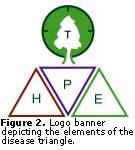
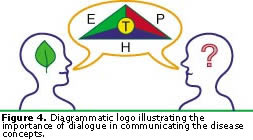
- If possible, use student interns or designers to make your page banners or page logos and graphics. Ohio State has a Technology Enhanced Learning and Research (TELR) internship for students. TELR interns assist faculty in developing individual course projects that incorporate technology such as web site preparation and streaming media. Student interns can help decide if your sessions click and make sense to other students. Web pages should have a thematic logo that is consistent with the course (Figure 1), symbolic, or illustrative of the page content (Figures 2, 3, 4). You can try graphic design all by yourself, but there may be too much to deal with, such as appropriate typefaces, serifs, layouts, visuals, spacing, design processes, and software competency. Designers take years to learn these things and students are sometimes quite proficient at it already. A part-time student designer working directly with you is a source of strength. They are good with the technology and, I hate to say it, are much more adept and quicker than I will ever be. Use them and be happy. :-)

Figure 3. Logo banner for the section on ancient cultures and plant pathology, illustrating the worship of fire, air, nature and water. |
- Check other websites carefully, looking for ideas on presentations and text. Some of what you want to use could already be available as a link from your page. This saves you considerable time in thinking about organizing and visualizing original materials.
- Don't underestimate the time required! There is some sort of conventional rule expressed sometimes during distance education meetings that asynchronous web courses take at least 5 to 6 times more effort to develop than a conventional course. Do not believe this. In my opinion, it will take at least one order of magnitude. By the time a course is at the starting gate, you will have invested an immense amount of time on the project. In estimating time, remember to include all the time you will spend in the evenings and weekends tinkering around with the details and getting the material "just right."
- Copyrights. Where another author's work is included in the course, permission must be sought, a fee may need to be paid and the original author acknowledged. The number of copyright permissions styles is surprising. For example, one newspaper required a $100 non-refundable fee and a lengthy comment about its copyright policy and signage. Then the permission may apply for only a 6-month period, after which another permission is needed. Oddly, some newspaper representatives did not respond to requests for permission, whereas others, like the Columbus Dispatch, Columbus, Ohio just required a simple credit line. Permission must be granted and will be cumbersome to obtain in some cases. What is a web teacher to do? There is an alternative: From your careful examination of other web sites, request permission to link to applicable pages. Although permission to link to a page is not required, it is good form to ask. Linking is far more convenient and interesting for students in most cases. Linking also has a secondary gain in that it creates a network among colleagues in other areas. The acknowledgement is often appreciated.
- Emoticons can take some of the distance out of the online student/teacher relationship. Emoticons are keystroke expressions illustrating some emotional expression such as facial expression or voice inflection. The most popular is the smiley (:-)). Encourage students to use emoticons, but don't overdo it. They are beneficial because students cannot see or hear you to pick up on your verbal and non-verbal cues via the web unless you are video-conferencing. Furthermore, students usually do not know one another, and cannot tell how you are really feeling about something from the text or an email. Setting the example yourself by using a few emoticons helps to encourage them to do the same.
- Be aware of version changes in the software. Just as you begin to get secure at using WebCT, Blackboard, or whatever courseware tools your university may have invested in, the software version changes. Some version changes are minor; others are more demanding to learn. This will continue to be an issue as the technologies advance and change rapidly. Nothing is fixed in time, including the software.
- Beta testing can be invaluable. Obtain student input before you release your complete course to the whole world. I recommend a pilot test of the course with a few students at first. I started a pilot test with 7 students and enrolled 26 the second time. Field-testing for feedback and other assessments helps to improve your course and gives you time to add the finishing touches before opening it up to a larger group of students.
It is important not to try to do it all by yourself, but don't be discouraged either. With a desire to learn and explore new technology, web teaching can be fun and interesting.
Student Evaluation
It should be noted that the beta test for my pilot online course involved direct input from a small number of students before the course was released. Beta testing is not intended to be a quantitative evaluation of the pilot course, but rather a way to clean up the shape and feel of the web pages and clarify the text from the students' point of view. Our university computer and education specialists recommended a pilot study be done to insure accuracy and proper operation of the site and avoid unforeseen issues prior to full release of the course. Student beta input was beneficial, highly varied, and specific for individual pages. For example, students did not comment on all the same areas. Areas were found that had technical problems (e.g. missing text words, misspells, broken links) and where ideas or concepts needed more clarification. Any future assessments for other online courses will definitely include a beta test.
An "anywhere, anytime" course can be taken by students on campus, as well as off campus. My Winter 2002 online class of 26 students included one in Switzerland, one in Newark, Ohio and the remainder on or near campus. The traditional classroom course typically enrolls 17-20 students and all are on or near campus or continuing education students. Occasionally a 'Program 60' life long learner enrolls.
Course evaluations for both course formats were accomplished by requesting students to respond to two open-ended questions anonymously at the end of the course: "What were the best parts of this course?" and "What areas need improvement?" This method was chosen because it allows for flexibility and deeper understanding of student responses as compared to a Likert scale. For the traditional classroom, I left the class and a student volunteer collected the evaluations in a sealed envelope and delivered them to the department office staff. The results were tabulated after the quarter ended. Students in the asynchronous class had to come in to the office complex for the final examination at various appointment times because of their work schedules. Students completed the evaluation questions after the final examination, in my absence, sealed them individually and delivered them to the office.
Major trends from the evaluations for the traditional classroom course included positive and enthusiastic responses concerning the teaching and learning style, the histories of plant pathology, and the development of student awareness of plant disease causes and social effects. Areas of improvement focused primarily on a lack of class time for a deeper development of the subject matter, and more in-class group work and case studies. One student said "…don't make the course strictly on the web."
Representative trends from evaluations of the asynchronous class included positive and enthusiastic statements about students' ability to work around their own schedules, work at their own pace, learn to use their computer, and construct their own homepage on WebCT. Students also commented positively on the interesting topics and the use of the discussion board. Areas for improvement primarily focused on technology, including a large number of complaints about the WebCT server being down at various times and the assignment drop box not working properly. A few students did not like the history of plant pathology coverage and some would have preferred more information about how plants affected society, and less discussion board activity. Concerning discussion board activity, it was noted that most students participated regularly and some profusely, whereas a few were more reserved and less inclined to elaborate beyond what was asked.
Overall, it is interesting that the comments of students in the traditional class focused on the content of the course and how that content was delivered, while the comments of the students in the online class focused more on the accessibility of the material and on the technological problems that limited their access. It seems clear that these students not only appreciated anywhere, anytime access to information, but also came to expect it to be delivered, problem-free.
Finally, be aware that many students are still conditioned by and comfortable with the traditional classroom setting dominated by the lecture/recitation format (9). I prefer to teach Bloom's taxonomy (1, Figure 5) in introductory sessions as a way to lay the foundation for higher order thinking in class. In the beginning of the course, it may take a while for your students to adjust to the new method of instruction. I have found that patience, promptness in answering their questions, and good humor are the keys.
Discussion: The Broader Context
Although goals are needed for any instructional mode, it may be a mistake or categorical error to strictly apply the same criteria defining classroom teaching goals to Internet learning. The two methods are radically different. For example, traditional classrooms are dominated by a lecture format; instructors present their knowledge base, and students repeat this knowledge base almost verbatim through some sort of rote examination (9). Discussion in the traditional classroom is linear, e.g., the students take turns speaking. In online discussions, however, students may "lurk" for days reflecting on the course material and then, when they feel comfortable, insert a comment or flood the discussion board. The way students learn and their motivations in selecting one method over the other can be quite different in an online course as opposed to the traditional classroom format. Online instruction will allow for input from students with different learning styles.
Although an educator's primary goal may be to develop a love of lifelong learning among the learners, in practice, educators frequently do just the opposite (see discussion of Claxton and Murrell, 1987, Dunn and Griggs, 1989, Krumboltz, 1987, cited in 13). Regardless of students' different learning methods, educators often require students to learn in exactly the same way, at the same time and pace, and in the same classroom environment. In the U.S.A. current teaching and learning practices are under fire, as pointed out by the recommendations of national commissions of higher education (10, 15). More recently Felder et al. (5), advocated reform and listed ways to encourage faculty to redesign curricula and courses for their distance education or web-based courses.
Today's trend is for higher education to shift from teacher-centered learning to more student-centered learning. Because of this transition, compelling reasons now exist to develop new online learning opportunities for today's students. Chambers et al. (2) cite many advantages of online teaching and learning. For example, teaching online enables faculty to update and creatively redesign courses in a variety of ways, to offer the course beyond classroom walls, and to be free from a specific, rigid class schedule. Benefits to the students include 24-hour access, no traveling, and no scheduling conflicts, as well as the freedom to study whenever and wherever it is most convenient. One could also add that there is no waiting period for the bus to come, or less of a problem from a car breakdown.
A frequently heard and quite understandable comment from teachers is that online learning "just isn't the same as a classroom." Aspiring online instructors must determine how to overcome this challenge. One possibility is through increased planning, preparation time, and significant changes in teaching style. A key is deciding how to balance one's time in order to make the most effective difference to students. It is helpful to know that some online learners, maybe most, tend to be more disciplined, motivated, and mature than their traditional student counterparts.
Exactly how do online students use their study time? We know from a study of three agricultural economics classes at The Ohio State University by Lahmers and Zulauf (6) how classroom students use their time. Despite the oft-repeated advice that college students should spend at least two hours studying outside of class for each hour in class, Lahmers and Zulauf found only 18 percent of the students followed this rule. In fact, the data revealed that the actual class-time to homework ratio was approximately 1-to-1. Additional studies are needed to answer the question as to how asynchronous learners use their time.
Despite objections to distance learning, there clearly are students who want this type of learning experience for various reasons. Distance education may be a viable solution for some of the problems and symptoms highlighted in today's higher education system. More importantly, distance education is a workable alternative to advancing the discipline of plant pathology to reach a much wider audience.
In comparison to the top ten list presented, Presby (11) described seven tips derived from a web-enhanced Production and Management course, a hybrid of half classroom, half online. Presby's list might be used as a catalyst for ideas in designing your course. Below is a summary of his tips:
- Choice. Students should be given a choice as to how they learn.
- Up-to-date information. Material in textbooks is often outdated and students can read more timely information in newspaper articles.
- Virtual company visits. Students are interested in 'seeing' what a company does. If a class trip is impossible to organize, virtual visits provide some interesting walk-through tours of companies.
- Textbook link. A textbook should provide material to supplement the computer.
- Communication within groups. In a traditional course, interaction between students is somewhat difficult, especially with shy students who sit in the back. Case studies can be employed in groups to stimulate discussion and communication in the groups.
- Interaction between groups. Each student was required to interact with someone else in the class by answering current events questions and/or adding to other students' answers.
- Actual class interaction. A pre-class or first class session is absolutely necessary to learn about course delivery and ask the instructor questions.
Of note are Presby's points that a textbook or an option should be provided to supplement a completely online course and the necessity of a face-to-face orientation session with the instructor. Ross and Schulz (12) discuss ways to spark interest in developing innovative web applications that can support or supplement campus based classes. They list the relative advantages and disadvantages of using the web in the classroom. The challenge will be how to bring higher order thinking into the asynchronous "classroom."
Whittington (16) presented provocative data on the level of instruction with respect to cognition in a live classroom. Data indicated that most professors discourse with students at the lower levels of cognition 98 percent of the time. Should this be considered the norm for online distance learning courses? Although teachers aspire to teach at the higher cognitive levels, they are not reaching these desired levels. Possibly we need to become more aware of all the cognitive levels of teaching, e.g. Bloom's Taxonomy or hierarchy of thought (1). Striving to achieve the higher-order thinking levels might be included as a goal in today's distance learning environment as well. Students may be better prepared to achieve higher cognitive levels by being aware of the instructor's instructional approaches to the course content. Figure 5 is a graphic representation of Bloom's taxonomy that could be useful for classroom or asynchronous learning.
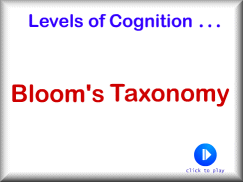
Figure 5. Visual representation of Bloom's taxonomy of higher order cognitive levels. The animation requires the Flash Player 6 plug-in.
|
Future Directions
Teachers make decisions about the way they choose to instruct or facilitate student learning. One may argue that a teacher should be secure enough to try almost anything, including distance learning. Others, however, may have good reason to hold on to their role as a traditional teacher. The hurdle facing most traditional teachers is possibly the unwillingness to take the risks and experiment with alternative teaching styles. The public is becoming more aware of the need for students to develop higher-order thinking skills in order to cope with modern society (8). Do students achieve their full learning potential in a traditional classroom? Maybe not. How does classroom teaching compare to distance learning? Is one superior to the other? We do not know yet.
In the case of asynchronous learning, interactive visuals or graphics can assume a highly significant role in stimulating the learning process, reaching higher-order thinking, and holding interest. An interesting study on what students are actually thinking at any given moment in a classroom was done by Lopez and Whittington (8). It was found that most students primarily think "random nonsense thoughts" during formal classroom lectures. This could mean that students rarely think at the higher cognitive levels no matter what level the professor teaches. Some students were more motivated when visual aids were employed during lecture. When visual aids were used in class, students could describe what the professor was discussing and what they were thinking about in regard to the subject matter. Would this be the case in asynchronous learning? That is, as a student prepares to engage in the online course material, would he or she be more or less inclined to have "random nonsense thoughts"? The answer to this question also must await further research.
In sum, I think learning the process of web instruction is interesting and fun, but it is not for everyone. Faculty need to make decisions about this technology and how to use it. The trend is toward more web-enhancement activity in academic and non-academic courses. My investment in developing an online course was high. At the same time, I balance this with being able to reach students I never would have had an opportunity to know - a much greater scope of student target audience was achieved for plant pathology. So, in the long run, I think it was well worth the investment :-).
Acknowledgements:
Appreciation for critical manuscript review is extended to Steve Nameth, Ann Lighthiser, Amy Grincewicz, Rachel Clark, and Jud Dunham who also prepared the Flash animation. Kendra Schimmel prepared the graphics as a former TELR intern. Salaries and research support provided by State and Federal Funds appropriated to the Ohio Agricultural Research and Development Center, the Ohio State University.
References:
(1) Bloom, B.S., Englehart, M.D., Furst, E.J., Hill, W.H., and Krathwohl, D.R. 1956. Taxonomy of Education Objectives Book 1: Cognitive Domain. New York: David McKay Company, Inc.
(2) Chambers, J.A. (ed.) 2001. Is online learning for you? Florida Community College at Jacksonville. Sponsored by WebCT. 30 pp. and mini CD.
(3) Curtis, C. 2001. Pioneer or Guinea Pig? Top ten take home lessons on starting an online course. Instructional Technology Symposium (ITS) 2001, sponsored by The International Society for Plant Pathology (ISPP). [Online] Available http://www.ispp-itsymposium.org.nz/ (May 23rd, 2002.)
(4) Cyrs, T.E. 1998. Essential Skills for College Teaching: An Instructional Systems Approach, 3rd Edition. Center for Educational Development. New Mexico State University, Las Cruces.
(5) Felder, R.M., Stice, J.E., and Rugarcia, A. 2000. The future of engineering education VI. Making reform happen. Chemical Engineering Education 34:208-215.
(6) Lahmers, A.G. and Zulauf, C.R. 2000. Factors associated with academic time use and academic performance of college students: a recursive approach. Journal of College Student Development 41:544-556.
(7) Leshin, C.B., Pollock, J., and Reigeluth, C.M. 1994. Instructional Design Strategies and Tactics. Educational Technology Publications. Englewood Cliffs, NJ
(8) Lopez, J. and Whittington, M.S. 2001. Higher-order thinking in a college course: a case study. NACTA Journal, December 2001, pp. 22-28.
(9) Nally, R. 1995. Designing computer-mediated conferencing into instruction. pp. 11-23. In Computer Mediated Communication and The Online Classroom, Volume II: Higher Education, Z.L. Berge and M.P. Collins (eds.). Hampton Press, NJ
(10) National Science Education Standards 1996. R. Klausner, Chair. National Committee on Science Education Standards and Assessment. National Academy Press. Washington, DC
(11) Presby, L. 2001. Seven tips for highly effective online courses. Syllabus 14:17.
(12) Ross, J.L. and Schulz, R.A. 1999. Using the World Wide Web to accommodate diverse learning styles. College Teaching 47:123-129.
(13) Starkey, M.R. 2000. Learning style and cognitive ability of Oak Harbor High School agricultural education students. M.S. thesis. The Ohio State University. Columbus, OH
(14) The Communicators Handbook: Tools, Techniques and Technology. 1996. Patricia Calvert, (ed.). 3rd edition. Maupin House. Gainesville, FL
(15) The Role of Scientists in the Professional Development of Science Teachers. 1996. Committee on Biology Inservice Teacher Programs. S. Ward, Chair. National Research Council. National Academy Press. Washington, DC
(16) Whittington, M.S. 1995. Higher order thinking opportunities provided by professors in college of agriculture classrooms. Journal of Agricultural Education 36:32-38.